
Overcoming Thermal Bottlenecks – Xuyuan Precision
How Custom Heat Sink Engineering Solves Insufficient Heat Dissipation in High-Power Electronics
In modern high-power electronics, a thermal heat sink frequently fails to dissipate enough heat when system power density outpaces basic thermal transfer capacity, poor airflow chokes convective cooling, or excessive interfacial thermal resistance traps heat directly at the semiconductor junction. Solving these heat dissipation bottlenecks requires moving beyond standard catalog parts to engineer a custom thermal heat sink integrated with optimized fin geometries, low-resistance interface materials, or advanced hybrid structures like embedded heat pipes and liquid cold plates.
As power densities continue to surge across AI servers, electric vehicles (EVs), and industrial automation, understanding these system-level bottlenecks is essential for ensuring long-term operational reliability.
1. The Root Causes of Insufficient Heat Dissipation in Modern Electronics
When electronic hardware overheats despite the presence of a thermal heat sink, engineers frequently assume the component is simply underpowered. In reality, thermal failure is almost always a system-level integration problem.
Insufficient cooling stems from systemic thermal bottlenecks—including mismatched material conductivities, restricted airflow, and high interface thermal resistance—that prevent thermal energy from moving efficiently from the semiconductor junction to the ambient environment.
As electronic components shrink into compact enclosures while consuming higher wattage, simply bolting a generic aluminum heat sink onto a high-flux processor is no longer effective. The total thermal resistance ($R_{th,total}$) of an electronic system is cumulative:
Rth,total = Rth,junction-to-case + Rth,TIM + Rth,conduction + Rth,convection
If any single link in this thermal chain is poorly engineered, heat builds up rapidly. Common systemic failures include:
- Selecting an aluminum alloy with insufficient thermal conductivity for localized high heat fluxes.
- Failing to account for aerodynamic pressure drop across densely packed cooling fins.
- Allowing microscopic air gaps to form between the heat source and the heat sink base plate.
To achieve stable, long-term performance, thermal management solutions must be evaluated as an interconnected, holistic engineering system rather than an isolated passive component.
2. Material Selection and Thermal Conductivity Limits
The base metal of your heat sink dictates how rapidly thermal energy can spread laterally away from a concentrated hot spot and conduct into the surrounding cooling medium. Selecting the wrong base metal creates an immediate bottleneck.
While standard structural aluminum grades are common, high-performance applications demand specialized material specifications:
- AL1070 Aluminum (~210–225 W/m·K): Features exceptional purity and high thermal conductivity compared to standard structural alloys. It is the ideal choice for high-performance extruded heat sinks and LED arrays.
- AL6061 Aluminum (~165–180 W/m·K): Offers a robust balance of high mechanical strength, structural integrity, and good conductivity. It is frequently specified when the heat sink also serves as a structural chassis component.
- C1100 Pure Copper (~385–400 W/m·K): Delivers nearly double the thermal conductivity of high-grade aluminum. It is mandatory for ultra-high heat flux applications where rapid lateral heat spreading is critical to prevent hotspot formation.
Table 1: Base Material Properties & Engineering Applications
| Material Specification | Thermal Conductivity (W/m·K) | Density (g/cm³) | Primary Engineering Advantage | Recommended Industrial Application |
|---|---|---|---|---|
| AL1070 Aluminum | ~210 to 225 | ~2.70 | High purity, excellent thermal transfer efficiency. | High-performance extruded heat sinks, LED light engines. |
| AL6061 Aluminum | ~165 to 180 | ~2.70 | High mechanical strength, structural durability. | Structural enclosures, EV battery frames, motor drives. |
| C1100 Pure Copper | ~385 to 400 | ~8.96 | Superior thermal conductivity & ultra-fast heat spreading. | High-density AI servers, laser diodes, high-flux IGBTs. |
3. Fin Geometry Optimization and Airflow Management
Even the highest-grade metal will fail to cool a device if the fin structure is poorly designed or if surrounding airflow cannot carry thermal energy away. Maximizing heat dissipation requires optimizing fin height, fin thickness, and fin pitch (spacing) to expand effective surface area without creating excessive aerodynamic backpressure.
If fins are packed too tightly to maximize surface area, the pressure drop across the heat sink increases exponentially. If the fan cannot overcome this backpressure, airflow stagnates, creating thermal dead zones that trap heat inside the enclosure. Conversely, if fin spacing is too wide, convective heat transfer drops due to insufficient surface area.
- Passive Cooling (Natural Convection): Mandates wider fin spacing to allow naturally buoyant hot air to rise freely without boundary layer interference.
- Active Cooling (Forced Convection): High-speed blowers can drive air through dense, ultra-thin fin structures (such as skived or folded fins) to maximize heat rejection within a compact mechanical envelope.
4. Eliminating Thermal Interface Resistance
A common oversight in thermal design is assuming two flat metal surfaces make 100% physical contact when bolted together. At a microscopic level, all machined surfaces exhibit peaks and valleys. When a processor is mounted directly onto a heat sink, microscopic air gaps form across the interface. Because stagnant air is an extreme thermal insulator (~0.026 W/m·K), these gaps trap heat, triggering localized temperature spikes at the silicon junction.
To eliminate interface thermal resistance, precision manufacturing at Xuyuan Precision focuses on two critical factors:
- Precision Surface Flatness: Heat sink mounting bases are CNC face-milled or fly-cut to sub-micron flatness tolerances, drastically reducing macroscopic gaps.
- High-Performance TIM Application: Phase-change materials, high-conductivity thermal greases, or graphite sheets fill microscopic surface voids and displace trapped air.
5. Advanced Technologies: Heat Pipes, Vapor Chambers, and Liquid Cold Plates
When traditional solid metal heat sinks reach their physical conduction boundaries due to escalating power densities, engineers must integrate advanced two-phase or liquid thermal technologies.
- Heat Pipes & Vapor Chambers: Utilize a vacuum-sealed chamber containing a working fluid. The fluid vaporizes at the hot evaporator section, travels rapidly across the chamber, condenses at the cooler fin area, and returns via capillary wick action. This phase-change mechanism provides super-high effective thermal conductivity (thousands of W/m·K), effectively flattening temperature gradients.
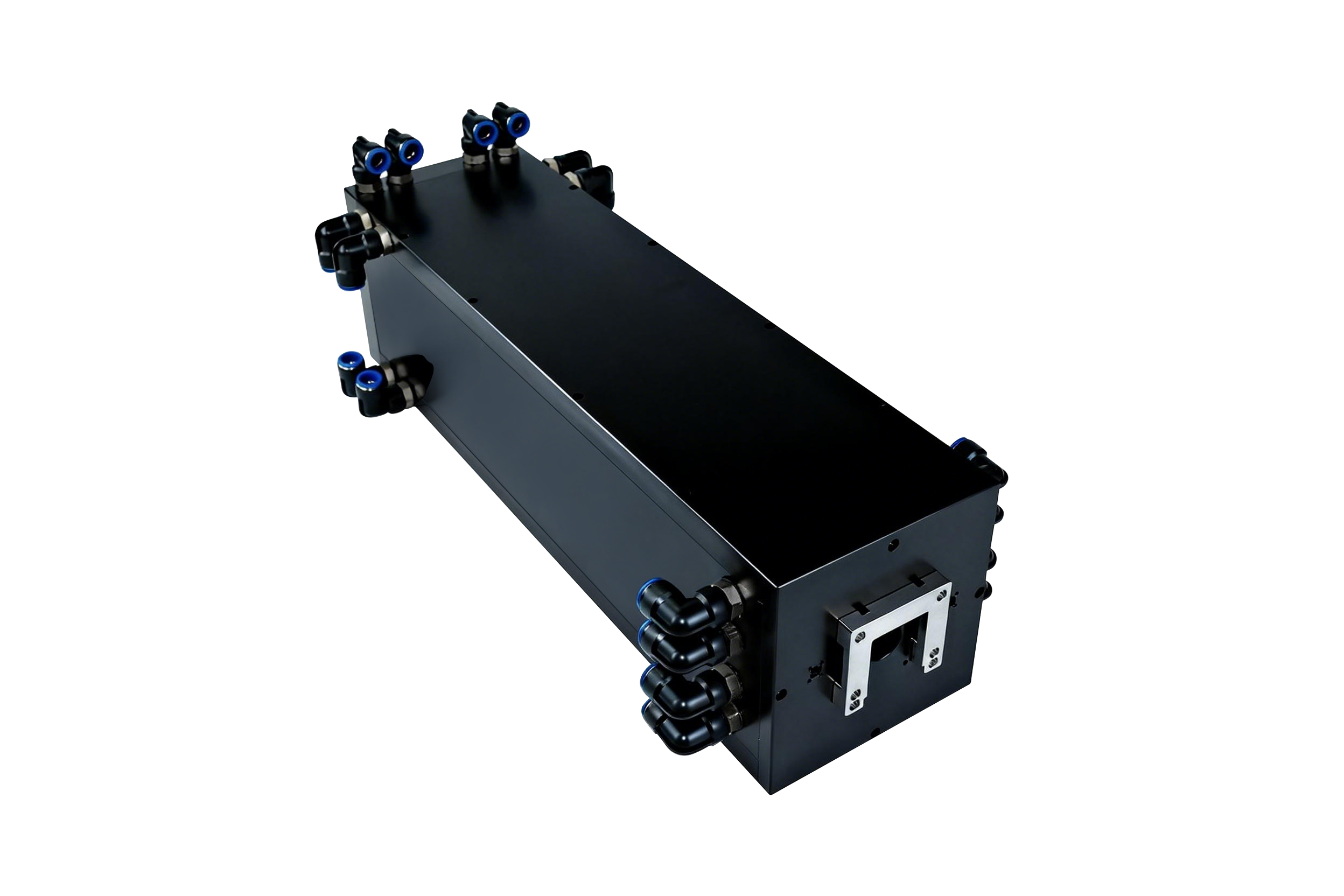
- Liquid Cold Plates: Circulate liquid coolant (such as a water-glycol mixture) directly through precision-machined internal micro-channels, absorbing massive thermal loads and transporting heat away to an external radiator.
Table 2: Advanced Thermal Technology Comparison
| Thermal Technology | Primary Mechanism | Heat Flux Capability | Typical Application Scenario |
|---|---|---|---|
| Solid Extruded Heat Sink | Conduction & Convection | Low to Medium (< 30 W/cm²) | Standard power supplies, industrial automation drives. |
| Heat Pipe / Vapor Chamber | Two-Phase Latent Heat Transport | High (30 to 150 W/cm²) | AI server GPUs, telecom power amplifiers, high-end PCs. |
| Liquid Cold Plate | Forced Liquid Convection | Ultra-High (> 150 W/cm²) | EV battery packs, high-power server racks, medical lasers. |
6. Industry-Specific Cooling Failures and Custom Solutions
Different industrial sectors encounter distinct thermal failure modes, demanding customized engineering approaches tailored to operating environments, spatial envelopes, and environmental conditions:
- AI Servers & High-Performance Computing (HPC): Ultra-dense GPU/CPU clusters generate concentrated heat flux. Custom skived-fin heat sinks with vapor chambers are deployed to manage intense thermal spikes without increasing fan power noise.
- Electric Vehicles & Power Electronics: IGBT modules, motor inverters, and DC-DC converters undergo severe thermal cycling and high vibration. Optimized bonded-fin heat sinks and vacuum-brazed liquid cold plates ensure structural integrity and long-term reliability.
- Industrial Automation & Robotics: Drives and controllers frequently operate inside sealed IP-rated enclosures with minimal airflow. Custom-profile heat sinks designed for tight physical footprints maximize passive cooling efficiency.
- Medical & Precision Electronics: Imaging devices and laser systems require precise thermal stability to eliminate thermal expansion drift and maintain measurement accuracy over long duty cycles.
7. Partnering with Xuyuan Precision for Custom Thermal Engineering
Overcoming complex thermal challenges requires more than purchasing off-the-shelf catalog parts; it demands a collaborative partnership with a specialized precision manufacturer capable of guiding your product from initial design through mass production.
At Xuyuan Precision, we deliver comprehensive, turnkey thermal manufacturing capabilities:
- Engineering-First DFM & CFD Simulation: Our engineering team conducts Computational Fluid Dynamics (CFD) thermal modeling and Design for Manufacturability (DFM) reviews to identify bottlenecks and optimize geometries before cutting metal.
- Multi-Technology Manufacturing under One Roof: Access precision aluminum extrusion, CNC 5-axis machining, skiving, cold forging, friction stir welding (FSW), vacuum brazing, heat pipe integration, and surface anodizing—all in-house.
- Prototype to Mass Production: Fast-track prototype fabrication coupled with rigorous CMM quality inspection guarantees a smooth, low-risk transition into high-volume manufacturing.
Eliminate Thermal Bottlenecks with Xuyuan Precision
Stop letting heat dissipation limits hold back your hardware’s performance. Work with Xuyuan Precision’s thermal experts to engineer custom heat sinks, vapor chambers, and liquid cold plates tailored to your exact specifications.
Frequently Asked Questions (FAQs)
Post time: Jul-29-2026


