
Description: Comparing custom aluminum heat sink suppliers? Discover why unit price alone is misleading. Learn how to evaluate process selection, DFM quality, material traceability, CNC accuracy, and prototype testing to reduce project risk and optimize production.
In custom aluminum heat sink procurement, sourcing and engineering teams frequently encounter a baffling scenario: sending the exact same 2D drawings and 3D CAD models to two custom manufacturers often yields completely different technical proposals and price points.
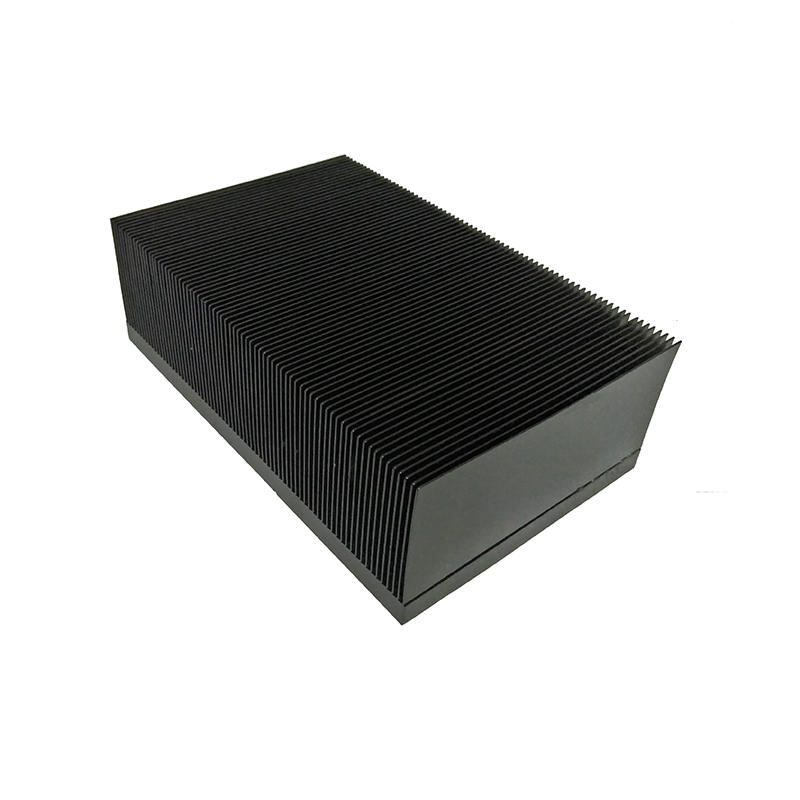
Supplier A might propose aluminum extrusion paired with secondary CNC machining. Supplier B may champion skiving technology. Supplier C might quote machining the entire assembly from solid aluminum stock.
These divergent manufacturing routes cause substantial price gaps—yet unit price alone never reveals which proposal is technically or commercially superior.
A custom heat sink functions simultaneously as a precise thermal component and a critical mechanical assembly. Its fin geometry must dissipate heat efficiently, its base must maintain uniform interface contact with the heat source, mounting holes must align with system tolerances, and the mass production process must deliver consistent quality long after prototype sign-off. Consequently, selecting a custom heat sink manufacturer is as much an engineering decision as it is a purchasing one.
At Xuyuan Precision, we leverage years of experience in precision thermal component manufacturing and secondary CNC machining to outline a practical, seven-point scorecard and technical framework to help you navigate supplier selection with confidence.
The Seven-Point Supplier Evaluation Scorecard
Before evaluating line-item prices, structured supplier selection begins by organizing your evaluation into seven key engineering domains:
| Evaluation Area | Key Questions Sourcing Teams Should Ask |
|---|---|
| 1. Process Selection | Why is the proposed manufacturing process optimal for my thermal load, geometry, and volume? |
| 2. DFM Review | What actionable design improvements are identified prior to tooling or prototyping? |
| 3. Material Control | Which specific aluminum alloy grade and temper condition are proposed, and how is traceability maintained? |
| 4. Secondary Machining | Which critical interface surfaces, datums, and mounting features require precise CNC finishing? |
| 5. Surface Treatment | Is the proposed surface finish functional (thermal/electrical/corrosion) or strictly cosmetic? |
| 6. Prototype Validation | What specific fit, form, and thermal metrics will the prototype samples validate? |
| 7. Production Repeatability | How will the factory control process stability and critical dimensions during volume production? |
The strongest proposal is rarely the one with the lowest unit price; it is the one that explains why its recommended manufacturing route fits your exact application risks.
Compare Process Fit Before Comparing Factory Scale
“Heat sink factory” is a broad umbrella term. Two facilities with identical square footage may rely on completely different manufacturing methodologies. Common manufacturing routes include aluminum extrusion, skiving, bonded-fin, die casting, CNC machining from solid, bonded fins, and heat-pipe integration.
Each manufacturing process follows a unique geometric, thermal, and cost structure:
1 Aluminum Extrusion
-
Ideal Use Cases: Constant cross-sectional profiles with continuous linear geometries.
-
Advantages: Highly cost-effective for medium- to high-volume runs; excellent for straight fins and cut-to-length production; easily combined with secondary drilling, milling, and tapping.
-
Limitations: Constrained by extrusion die fin-to-gap aspect ratios; cannot produce ultra-dense/thin fins or complex 3D features without extensive secondary machining.
2 Skiving
-
Ideal Use Cases: High heat flux densities, compact footprints, and high fin aspect ratios.
-
Advantages: Shaves thin, dense fins directly from a solid aluminum or copper block. The base and fins form a seamless, single-piece thermal structure with zero interface thermal resistance.
3 Cold Forging
-
Ideal Use Cases: Pin-fin arrays requiring multidirectional airflow.
-
Advantages: Produces high-density pin structures with superior thermal conductivity in complex air-flow environments. Requires dedicated tooling investment.
4 Die Casting
-
Ideal Use Cases: Integrated designs where the heat sink doubles as an enclosure, mounting frame, or complex 3D housing.
-
Advantages: High geometric freedom for structural features. However, cast aluminum alloys (e.g., ADC12) generally offer lower thermal conductivity than wrought aluminum alloys.
5 CNC Machining from Solid
-
Ideal Use Cases: Early-stage prototype validation, low-volume pilot runs, or highly complex base geometries with changing specifications.
-
Advantages: Zero tooling cost and ultimate design flexibility.
-
Limitations: High material waste and prolonged cycle times make machining every individual fin from solid stock cost-prohibitive for volume production.
Xuyuan Precision Insight: A capable supplier should never force every project into a single, in-house process. Instead, they should evaluate your thermal target, production volume, and cost targets to recommend the most suitable manufacturing route.
DFM Quality Is Visible Before the First Part Is Made
One of the clearest indicators of a manufacturer’s technical capability is the feedback provided during the initial quote phase. A price returned instantly with zero technical questions may seem convenient, but it often indicates that the drawings were not thoroughly reviewed for manufacturability.
A thorough Design for Manufacturability (DFM) review identifies critical risks before tooling:
-
Fins that are too thin or tall for the chosen process aspect ratio
-
Overly restrictive global tolerances that drive up machining costs unnecessarily
-
Mounting holes positioned too close to fin roots, causing tool clearance issues
-
Excessive base thickness that adds dead weight without improving thermal spreading
-
Thermal contact areas accidentally specified with non-conductive surface treatments
Good DFM Differentiates Function-Critical Features
When a drawing applies tight tolerances to every dimension, machining and inspection costs skyrocket. A knowledgeable thermal manufacturer separates Critical-to-Quality (CTQ) features from standard dimensions:
-
Critical-to-Function Features: Component contact surface flatness, mounting-hole centerlines, interface height, connector clearances, and primary datums.
-
Non-Critical Features: Outer cosmetic chamfers, non-mating fin edges, and standard external reliefs.
By relaxing non-critical tolerances, the manufacturer reduces scrap rates and unit costs without compromising thermal performance.
Material Control: Moving Beyond Basic Alloy Numbers
Aluminum is favored in thermal management for its excellent thermal conductivity, low weight, and machining versatility. Alloys like 6061 and 6063 are industry mainstays, but choosing the right material involves more than nominal thermal conductivity tables.
Optimal selection requires balancing:
-
Process Compatibility: 6063 is favored for smooth extrusion profiles, while 6061-T6 offers superior machinability and structural strength for heavy CNC milling.
-
Structural Rigidity: Heavier assemblies subjected to high mechanical mounting forces require higher yield strength.
-
Surface Finish Readiness: Alloy chemistry directly affects anodizing color consistency and coating thickness control.
Material Traceability in Volume Sourcing
For production runs, sourcing teams must verify:
-
Mill Test Certificates (MTC) for incoming raw material
-
Formally documented substitute alloy approvals
-
Strict Incoming Quality Control (IQC) protocols
Preventing unapproved material substitutions between prototype sign-off and mass production is vital for maintaining consistent thermal conductivity and mechanical integrity.
Evaluate the Base Before the Fins
Thermal discussions often revolve around fin counts, heights, and surface areas. However, heat must first conduct through the base before fins can dissipate it to ambient air. If base contact is compromised, even an aggressive fin array will fail.
Critical Base Parameters:
-
Contact Surface Flatness: Concave or convex bases increase Thermal Interface Material (TIM) thickness, dramatically raising contact thermal resistance.
-
Optimized Spreading Thickness: An overly thick base adds excess mass and machining cost; an under-designed base starves outer fins of thermal flux.
-
Surface Roughness (Ra): Achieving an optimal surface finish prevents micro-air gaps at the heat source interface.
Surface Treatment: Tailored by Functional Area
Specifying a blanket treatment like “Black Anodized” on an engineering drawing leaves room for ambiguity:
-
Masking Needs: Does the semiconductor contact surface require masking to maintain electrical grounding or minimize thermal interface resistance?
-
Threaded Holes: Are tapped mounting holes masked to prevent thread tolerance shifts?
-
Cosmetic vs. Functional Finishes: External surfaces may require aesthetic color uniformity, whereas internal surfaces prioritize corrosion resistance or thermal emissivity.
Surface treatments should be defined by functional zone rather than applied blindly across the entire component.
Prototype Validation: Beyond Visual Inspection
A custom prototype must validate three distinct aspects before design freeze:
-
Mechanical Fit Check: Verify overall envelope dimensions, hole alignments, connector clearances, and mounting torque.
-
Thermal Performance Testing: Test under representative heat flux, ambient temperatures, airflow velocity, and mounting pressure to measure real-world thermal resistance.
-
Manufacturability & Repeatability: Confirm that the sample does not rely on unsustainably high manual deburring or hand-polishing to meet specifications.
Managing Process Changes Between Prototype and Volume Production
Prototypes are often machined from solid stock for quick iteration. Once finalized, volume production may shift to custom extrusion, die casting, or dedicated forging.
Because a process change alters material temper, internal stress, and surface finish, any change in manufacturing route must trigger a formal re-validation.
Uncovering Hidden Assumptions in Quotes
Discrepancies between supplier quotes often stem from different interpretations of the drawing. Sourcing teams can use the following checklist to identify hidden assumptions:
| Quoted Difference | Potential Hidden Reason |
|---|---|
| Lower Tooling Cost | Supplier may be adapting an existing standard profile rather than quoting dedicated custom tooling. |
| Lower Unit Price | Quote may omit specialized masking steps or use a lower-grade alloy. |
| Higher Machining Cost | All drawing tolerances were interpreted as high-precision CNC operations. |
| Higher Prototype Cost | Quote includes dedicated fixture design and complete First Article Inspection (FAI) reporting. |
| Extended Lead Time | Includes full lead times for custom extrusion die creation and tooling qualification. |
To ensure accurate side-by-side comparisons, confirm that all suppliers share identical assumptions regarding material grades, manufacturing steps, CNC operations, masking requirements, inspection levels, and packaging specifications.
Sourcing Rule: Compare Project Risk, Not Just Unit Price
Selecting a custom aluminum heat sink manufacturer is ultimately a risk-management exercise. The goal is to mitigate thermal, assembly, tooling, quality, and supply-chain risks simultaneously.
A low-bid supplier utilizing an unsuitable manufacturing process can quickly become expensive if thermal bottlenecks or assembly failures require post-tooling redesigns.
At Xuyuan Precision, we partner with engineering and procurement teams early in the development cycle. By conducting rigorous DFM reviews, optimizing process selection, and maintaining strict material and dimensional controls, we ensure your custom heat sinks deliver uncompromised thermal performance and seamless volume production.
Frequently Asked Questions (FAQ)
Q1: What are the most important factors when choosing a custom aluminum heat sink manufacturer? A1: Focus on process selection fit, DFM expertise, material traceability, secondary CNC machining capability, surface treatment control, prototype validation standards, and volume repeatability. A qualified manufacturer should explain why a specific process fits your heat load and geometry rather than quoting without technical feedback.
Q2: What technical information should be provided in an RFQ for custom heat sinks? A2: Provide 2D drawings with critical tolerances (CTQs), 3D CAD models, total power dissipation (Watts), heat source dimensions/location, maximum allowable junction temperature, airflow conditions, available envelope space, surface finish specifications, prototype quantities, and estimated annual volume (EAU).
Q3: Is 6061 or 6063 aluminum better for a custom heat sink? A3: Neither is universally superior. 6063 offers higher thermal conductivity and superior extrusion characteristics, making it ideal for extruded profiles. 6061-T6 provides higher yield strength and excellent machinability, making it preferred for heavily CNC-machined bases and structural thermal components.
Q4: Should I choose aluminum extrusion or skiving for my heat sink design? A4: Extrusion is best for constant cross-sectional profiles and medium-to-high volume runs with moderate fin densities. Skiving is ideal when high fin density, thin fin profiles, and a single-piece base-to-fin thermal structure are required within a compact footprint.
Q5: What should be tested on custom heat sink prototypes? A5: Prototypes should be validated for physical fit and mounting alignment, base contact flatness, surface finish compliance, and empirical thermal performance (measuring temperature rise under actual heat load, TIM thickness, and airflow conditions).
Post time: Aug-25-2026


