
As technology advances, high-power electronics—such as electric vehicle (EV) inverters, battery thermal systems, AI servers, and industrial laser equipment—are generating unprecedented levels of heat. In these demanding environments, traditional cooling is no longer enough. Liquid cooling systems must do more than just dissipate heat; they must handle high operating pressures, prevent coolant leaks, control thermal distortion, and operate reliably over decades.
This is why Friction Stir Welded (FSW) liquid cold plates have become the preferred thermal solution for critical, high-power cooling projects.
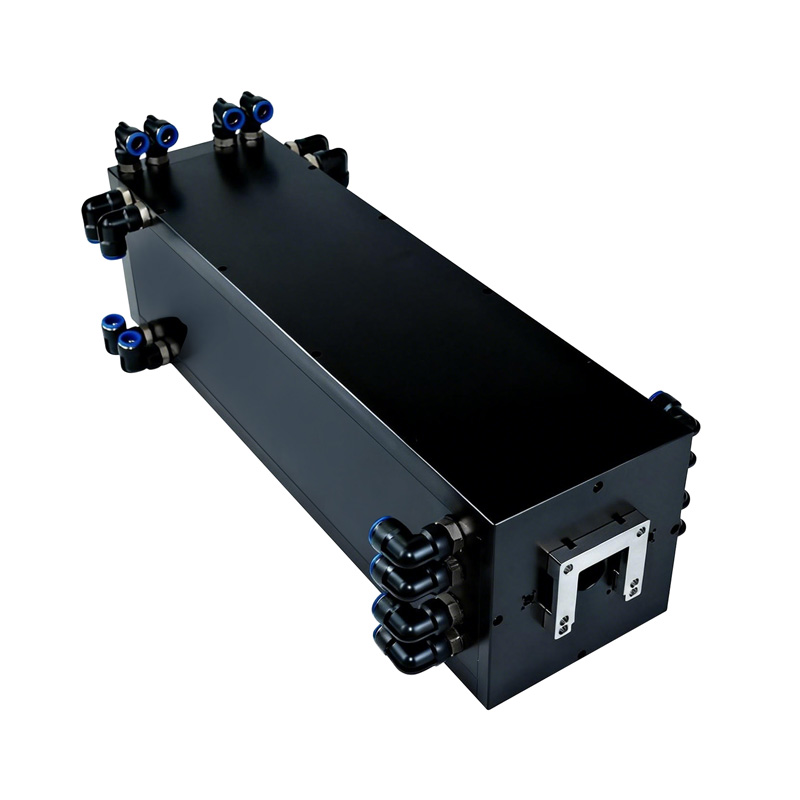
In this comprehensive guide, we will break down how FSW liquid cold plates work, why they are ideal for aluminum cooling systems, how they compare to other manufacturing methods, and what you should prepare before requesting a custom FSW cold plate.
What is an FSW Liquid Cold Plate and How Does It Work?
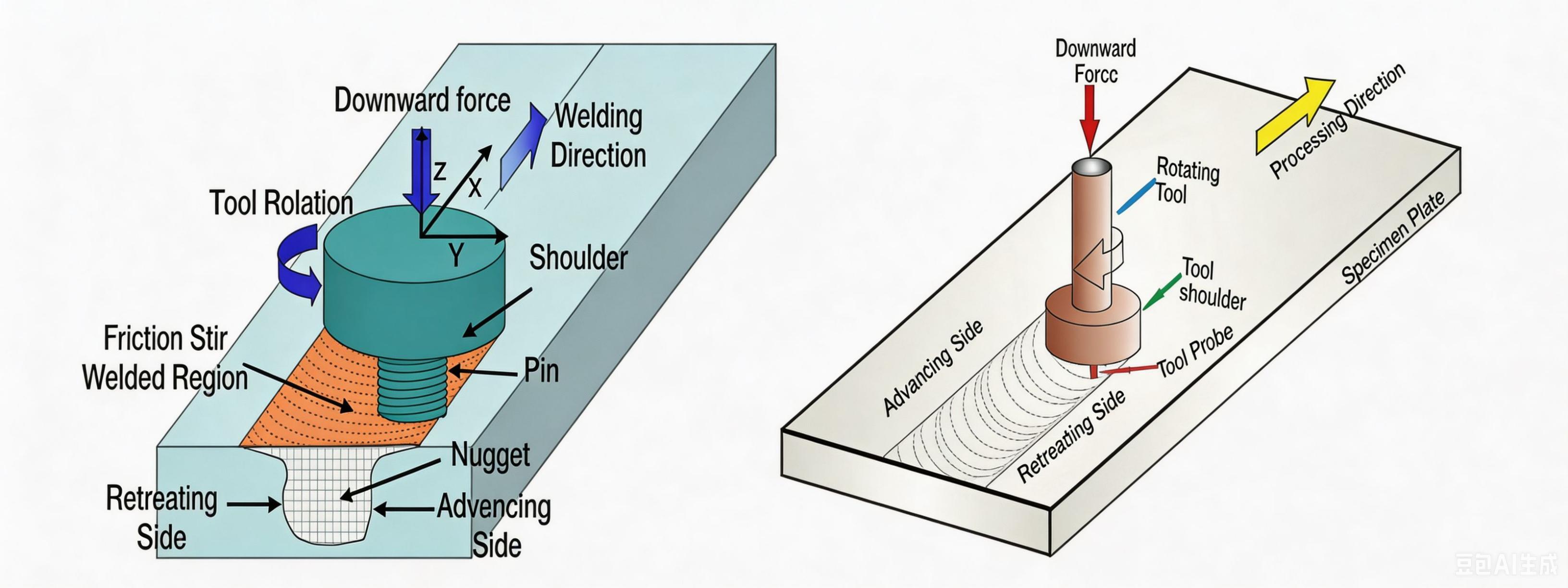
Friction Stir Welding (FSW) is a solid-state joining process. Unlike traditional welding methods that melt the metals, FSW joins two pieces of metal without fully melting the base materials.
During the process, a rotating cylindrical tool with a specially designed pin and shoulder is pressed into the joint area between a machined cold plate base and a cover plate. The friction between the rotating tool and the metal generates intense localized heat. This softens the material, allowing it to flow plastically around the tool and forge together behind it to create an incredibly strong metallurgical bond.
The Step-by-Step Manufacturing Sequence
At Xuyuan Precision, we maintain rigorous process controls at every stage of FSW cold plate manufacturing:
| Step | Manufacturing Stage | Purpose & Critical Impact |
|---|---|---|
| 1 | Material Preparation | Selecting premium aluminum (e.g., AL6061, AL6063) to ensure machining stability and weld quality. |
| 2 | CNC Channel Machining | Milling custom internal coolant paths and mounting features to optimize flow and heat transfer. |
| 3 | Cleaning Before Welding | Eliminating chips, oils, and surface contaminants to prevent weld defects and ensure channel cleanliness. |
| 4 | Cover Plate Alignment | Accurately positioning the cover plate over the base to secure the sealing path. |
| 5 | FSW Operation | Utilizing precise tool rotation and travel control to seal the cover and base with a solid-state weld. |
| 6 | Post-Weld Machining | Finishing mounting surfaces, ports, and thread interfaces to achieve strict flatness tolerances. |
| 7 | Leak & Pressure Testing | Verifying the sealing integrity under high pressure to guarantee field reliability. |
| 8 | Final Inspection | Inspecting critical dimensions, surface finish, and overall cleanliness before packaging. |
Why FSW is the Perfect Match for Aluminum Cold Plates
Aluminum is the material of choice for liquid cold plates due to its excellent thermal conductivity, lightweight characteristics, and cost-effectiveness. However, joining aluminum using conventional fusion welding (like TIG or MIG) is notoriously difficult. Fusion welding often introduces defects such as:
- ✕ Porosity and internal cracking
- ✕ Severe thermal distortion and warping
- ✕ Altered material properties in the heat-affected zone
Because FSW is a solid-state process, it avoids these melting-related defects entirely.
Core Advantages of FSW for Aluminum Cold Plates:
-
✓Minimal Thermal Distortion: Low heat input keeps the cold plate flat, maintaining dimensional stability and ensuring perfect contact with your electronic components.
-
✓Excellent Mechanical Strength: The forged joint area is highly robust, supporting high operating pressures without risk of fatigue or cracking.
-
✓No Filler Metal Required: Since the joint is made entirely of the base material, there is zero risk of filler-metal contamination in the coolant channels.
-
✓High Repeatability: With automated CNC-based FSW equipment, Xuyuan Precision achieves consistent, highly repeatable weld paths for mass production.
FSW vs. Vacuum Brazing and Conventional Cooling Methods
Choosing the right manufacturing process depends on your specific design requirements. Here is how FSW stacks up against other common liquid cold plate manufacturing methods:
Process Comparison for Liquid Cold Plates
| Process | Main Strength | Typical Use Case | Key Design Consideration |
|---|---|---|---|
| FSW Cold Plate | High-strength solid-state sealing; low distortion. | Custom aluminum cold plates for high-power applications (EV, AI servers). | Requires a continuous tool path and flat weld access. |
| Brazed Cold Plate | Can join extremely complex internal fins or multi-layer structures. | High heat flux applications with compact or micro-channel requirements. | Demands strict cleanliness control and precise brazing oven parameters. |
| Tube Cold Plate | Simple and highly reliable copper-tube flow paths. | Cost-sensitive or corrosion-sensitive designs. | Less design flexibility; higher thermal resistance at the tube-to-plate interface. |
| Extruded Cold Plate | Excellent cost-efficiency for mass production. | Simple, linear coolant flow paths. | Limited to straight, uniform internal channel structures. |
FSW vs. Brazed Cold Plates: A Quick Head-to-Head
While brazed cold plates are unmatched for highly compact, multi-layered designs containing dense internal folded fins, FSW cold plates are often preferred when the priority is maximum joint strength, lower thermal distortion, and cost-efficient aluminum construction.
Supporting Your High-Power Cooling Systems
The thermal performance of an FSW liquid cold plate relies on matching the custom flow channel layout with your heat source. FSW enables engineers to design customized flow paths (serpentine, parallel, or optimized manifolds) close to high-power modules, maximizing heat transfer while keeping the mounting surface flat and stable.
Common Applications of FSW Liquid Cold Plates:
EV Inverters & Battery Packs: Demands lightweight structures, high vibration resistance, and long-term sealing reliability.
AI Server GPU Cooling: High heat flux requires targeted, custom-machined cooling paths and flat contact surfaces.
IGBT & Power Converters: Requires high-reliability thermal cycling under continuous heavy loads.
Industrial Laser Systems: Needs highly stable temperature control to maintain consistent laser wavelengths.
Medical Equipment: High-precision liquid cooling to ensure patient-critical system uptime.
Engineering Checklist: What to Prepare
To ensure your liquid cold plate is designed for optimal thermal, hydraulic, and mechanical performance, buyers should evaluate key design criteria early. When requesting a quote, preparing the following information will help our engineering team design the most efficient solution:
-
Thermal & Hydraulic Requirements: What is the heat load (W), maximum component temperature limit, coolant type (e.g., water/glycol), target flow rate, and maximum allowable pressure drop?
-
Mechanical Constraints: What is the overall envelope size, port direction, fitting type, and mounting hole configuration?
-
Weld Path Planning: Are the internal channels designed to accommodate the FSW tool and pin access?
-
Testing Requirements: What are your specifications for operating pressure, leak criteria, and internal cleanliness limits?
Partner with Xuyuan Precision for Custom FSW Solutions
At Xuyuan Precision, we provide end-to-end support for custom FSW liquid cold plates—from initial thermal design and CNC channel machining to FSW joining, surface finishing, and comprehensive pressure-testing.
Our advanced process control, stable fixturing, and state-of-the-art testing equipment guarantee that your cold plates will perform reliably under the most demanding field conditions.
Have an upcoming high-power thermal project?
[Contact jason@xyjmrk.cn] to discuss your project requirements, submit your drawings, or request a custom quote.
Post time: Jul-17-2026


