
Copper vs. Aluminum Liquid Cold Plates: Material Selection, Weight, Corrosion, and Cost Engineering
A Comprehensive B2B Decision Guide for AI Servers, Electric Vehicles, and High-Power Industrial Thermal Management.
Selecting the optimal material for a custom assembled liquid cold plate is one of the most critical decisions in liquid cooling system design. The choice between copper and aluminum directly dictates thermal transfer efficiency, structural weight, corrosion resistance, manufacturing complexity, and total cost of ownership (TCO). This comprehensive engineering guide evaluates both metals across seven key technical dimensions to help your engineering team specify the right material for your application.
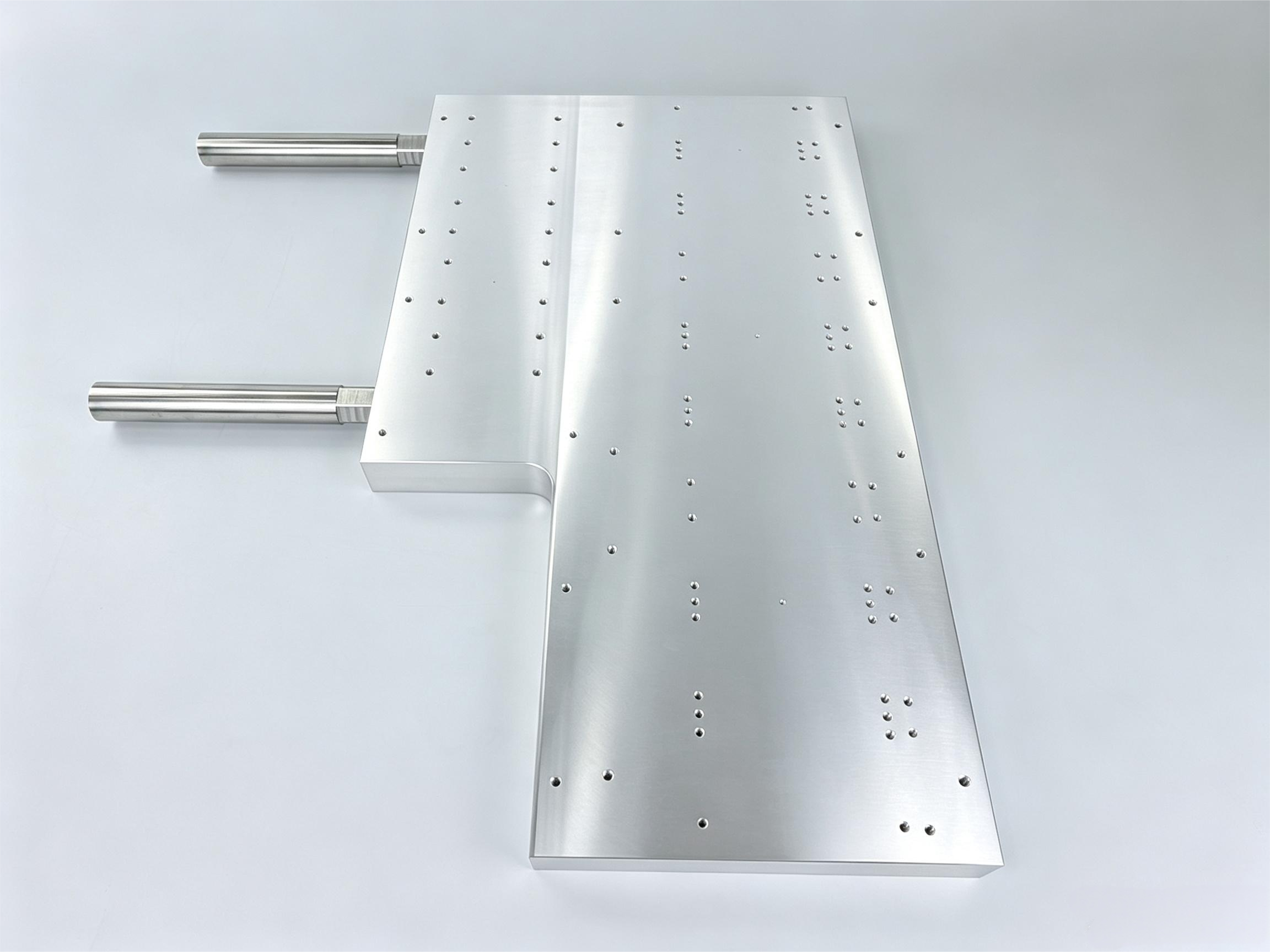
1. Material Thermal Conductivity: Analyzing Heat Transfer Capabilities
Thermal conductivity is the primary metric for cooling performance, but it must be matched to the actual heat load of the semiconductor or battery module. Over-engineering wastes budget, while under-engineering causes catastrophic system failure.
Copper (specifically alloys like C11000) possesses a high thermal conductivity ranging from 385 to 400 W/m·K. This atomic-level advantage allows a copper liquid cold plate to absorb and spread heat laterally almost instantly, preventing localized hot spots beneath ultra-dense processors. In contrast, standard aluminum alloys (such as 6061 or 6063) offer thermal conductivity between 167 and 200 W/m·K.
While aluminum transfers heat efficiently, a high heat flux cooling solution using aluminum requires careful internal channel optimization—such as increasing skived fin density or embedding micro-channels—to match the raw thermal performance of a flatter copper plate.
2. System Weight Considerations: Impact on Mechanical and Mobile Designs
The physical density of the cooling component dramatically impacts the structural engineering, payload capacity, and mounting hardware of the final product assembly.
Copper is a dense metal, weighing approximately 8.96 g/cm³. A large copper cold plate designed to cool an entire server chassis requires heavy-duty reinforced mounting brackets to prevent motherboard warping or structural failure during transit. Conversely, aluminum has a density of roughly 2.70 g/cm³—making it approximately 70% lighter than copper.
For mobile platforms, this weight reduction allows engineers to design larger, structurally integrated cold plates that can double as physical chassis components or battery mounting frames without adding excessive dead weight.
3. Corrosion Resistance and Coolant Compatibility: Ensuring Long-Term Reliability
The chemical interaction between the base metal and circulating fluid dictates the lifespan of the liquid cooling system. Ignoring fluid chemistry guarantees premature system failure.
When selecting cold plate materials, engineers must map the entire liquid cooling loop. If an aluminum cold plate is connected to copper piping or a copper radiator, the dissimilar metals create a galvanic cell. The coolant acts as an electrolyte, stripping ions from aluminum (the anode) and depositing them on copper (the cathode), eventually eroding internal channels and causing catastrophic fluid leaks.
Both metals require a precisely balanced water-glycol mixture with industrial corrosion inhibitors. Evaluating design variables beyond base metals—such as pressure decay testing and fluid compatibility—is critical to long-term reliability.
4. Manufacturing Complexity: Machining and Assembly Capabilities
Theoretical thermal designs must be cost-effectively manufacturable at scale. The physical properties of the chosen metal dictate machining speeds, tool wear, and available joining processes.
Aluminum is a soft, highly machinable metal allowing rapid high-speed CNC routing of deep channels and fins. It is the premier candidate for Friction Stir Welding (FSW)—a solid-state joining process that fuses metal plates together without melting, producing zero-porosity, leak-proof joints. Copper is notoriously gummy during machining, leading to slower feed rates and increased tool wear. Because copper dissipates heat rapidly, traditional welding is difficult, making vacuum furnace brazing or precision soldering the preferred assembly route.
Table 1: Manufacturing Processes for Copper vs. Aluminum Liquid Cold Plates
| Characteristic | Aluminum Liquid Cold Plate | Copper Liquid Cold Plate |
|---|---|---|
| Machinability | Excellent; high-speed CNC routing. | Fair; slower speeds, increased tool wear. |
| Preferred Joining Method | Friction Stir Welding (FSW), Vacuum Brazing. | Vacuum Brazing, Precision Soldering. |
| Internal Structure Capability | Deep milled channels, extruded pin fins. | Skived micro-fins, high-density folded fins. |
| Production Scalability | Very High (fast cycle times via FSW). | Medium (furnace batch cycle times for brazing). |
5. Sector-Specific Application Analysis: AI, EVs, and Power Electronics
Industry constraints frequently dictate material selection prior to detailed fluid dynamics modeling:
- AI Servers & HPC: Modern AI accelerators generate intense heat flux in tiny footprints. Copper is virtually mandatory for the contact plate directly over high-wattage GPUs/CPUs to prevent thermal throttling.
- Electric Vehicles (EV): EV battery cold plates cover large surface areas and manage distributed heat loads. Aluminum is universally specified to meet vehicle lightweighting goals.
- Power Electronics & Lasers: IGBT modules and high-power inverters require localized heat spreading while keeping weight and cost manageable. These applications benefit from a hybrid cold plate—embedding copper contact pads into a large aluminum base.
6. Total Cost of Ownership: Balancing Performance with Production Budgets
Procurement teams must evaluate total manufacturing, logistics, and operational lifecycle costs rather than raw metal commodity prices alone.
Aluminum is an abundant, low-cost commodity. Combined with fast CNC machining and FSW assembly, aluminum offers low per-part costs in mass production and significantly reduces international freight charges due to its lightweight profile. While copper raw material and machining costs are higher, a super-efficient copper cold plate may allow system engineers to specify smaller pumps and lower fluid volumes, reducing total system power consumption over a multi-year operational lifespan.
Table 2: Total Cost Analysis Comparison
| Cost Variable | Aluminum Assembled Cold Plate | Copper Assembled Cold Plate |
|---|---|---|
| Raw Material Cost | Low, highly stable commodity pricing. | High (Subject to global copper market fluctuations). |
| Machining & Tooling Cost | Low (High-speed CNC, low tool wear). | High (Increased cycle time and tool wear). |
| Logistics & Freight Impact | Low (Lightweight freight savings). | High (Heavy freight costs). |
| Recommended Mass Production | Ideal for high-volume OEM runs (EV, Telecom). | Ideal for high-value niche systems (AI, Laser, Medical). |
7. Partnering with Xuyuan Precision for Custom Liquid Cold Plate Manufacturing
Selecting between copper and aluminum is only the first step; executing the physical design requires a highly capable custom liquid cooling plate manufacturing partner. B2B buyers require a fully tested, drop-in thermal assembly that guarantees zero leaks over years of operation.
At Xuyuan Precision (旭源精密), our thermal engineering team goes far beyond simply building to blueprint:
- In-House Manufacturing Capabilities: Comprehensive under-one-roof production including multi-axis CNC milling, Friction Stir Welding (FSW), vacuum brazing, skiving, and surface anodizing/nickel plating.
- Thermal Optimization & DFM: Internal channel geometry design, CFD pressure drop simulation, and Design for Manufacturability optimization.
- 100% Leak & Pressure Verification: Every cold plate undergoes 100% pressure decay testing and helium leak detection to guarantee zero porosity in welded or brazed joints.
Need Help Selecting the Right Material for Your Liquid Cold Plate?
Xuyuan Precision delivers turnkey custom liquid cold plates backed by full CFD thermal simulation, rapid prototyping, and 100% leak-tested mass production.
Frequently Asked Questions (FAQs)
Post time: Jul-31-2026


