
The explosive growth of new energy vehicles (NEVs), AI data centers, energy storage systems (ESS), and high-power electronics has made thermal management a critical engineering bottleneck. The performance, reliability, and lifespan of these advanced electronics directly depend on heat dissipation.
At the center of modern liquid cooling systems is the liquid cold plate (also known as a water cooling plate). However, not all cold plates are created equal. The underlying manufacturing process dictates the fluid flow design, structural pressure resistance, thermal efficiency, and overall unit cost.
At Xuyuan Precision, we specialize in precision thermal management components. In this guide, we evaluate the 5 primary liquid cooling plate manufacturing technologies and provide a practical selection framework to help you match the ideal process to your application requirements.
5 Essential Liquid Cooling Plate Technologies at Xuyuan Precision
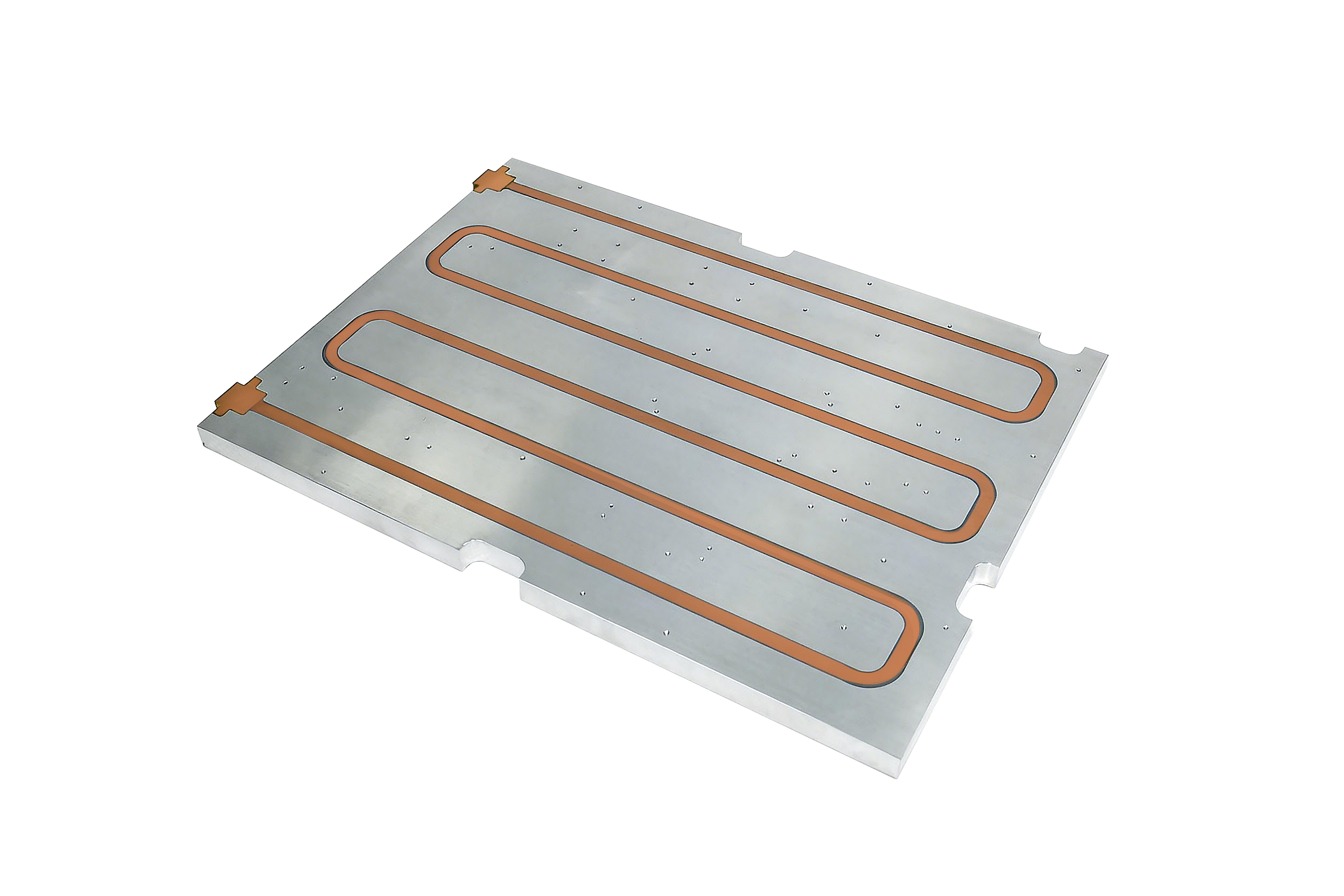
1. Embedded Tube Cold Plates
Process Principle
In this process, high-thermal-conductivity copper or stainless steel tubes are embedded into pre-machined grooves within a metal substrate (typically aluminum). The assembly is fixed through mechanical press-fitting or epoxy/brazing bonding, forming a sealed fluid channel.
Key Advantages
-
Zero Leakage Risk: Because the fluid channel is formed by a continuous, jointless metal tube, there are no internal weld seams, ensuring high long-term operational reliability.
-
Cost-Effective & Mature: Simple processing and low tooling costs make this technology ideal for standardized designs and mass production.
Limitations
-
Design Constraints: Fluid paths are limited to simple linear or serpentine/S-bend layouts, making it difficult to achieve complex designs for ultra-high heat flux density.
-
Galvanic Corrosion: Combining dissimilar metals (copper tube and aluminum base) requires protective surface treatments or specialized thermal interface materials to prevent galvanic corrosion over time.
Typical Applications
-
Server rack liquid cooling systems
-
Industrial inverter cooling modules
-
Standardized power supply units
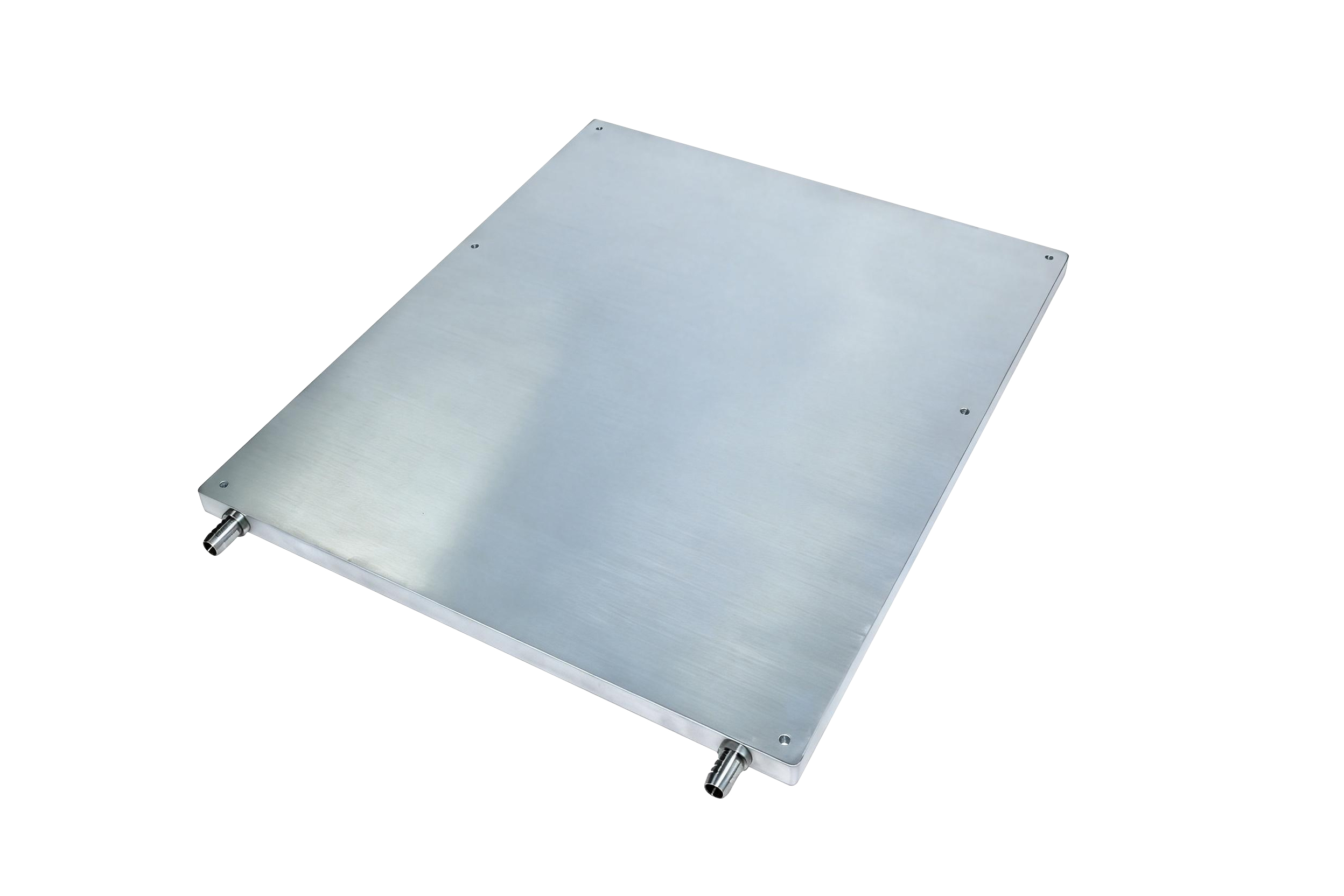
2. Vacuum Brazing Technology
Process Principle
Components are placed in a high-vacuum furnace where a filler metal (such as an Al-Si alloy) with a lower melting point than the base material melts and penetrates the interface between the flow plate and cover plate via capillary action. Upon cooling, it creates a high-strength metallurgical bond.
Key Advantages
-
Complex Flow Path Design: Enables intricate inner structures like micro-channels, pin-fins, and internal ribs, boosting thermal dissipation efficiency by over 30%.
-
Lightweight & High Pressure Resistance: Uses an all-aluminum alloy construction that delivers high joint strength capable of withstanding working pressures over 10 Bar.
Key Challenges
-
Strict Process Control: Requires precise control over filler alloy formulation, cleanliness, and furnace vacuum levels; minor defects can cause channel blockages or leakage.
-
Higher Initial Investment: Specialized vacuum equipment requires higher upfront investment, making it best suited for scalable production runs.
Typical Applications
-
EV battery thermal management plates (Power Battery Packs)
-
5G telecommunication base station high-power chips
-
High-density computing & AI GPU liquid cooling
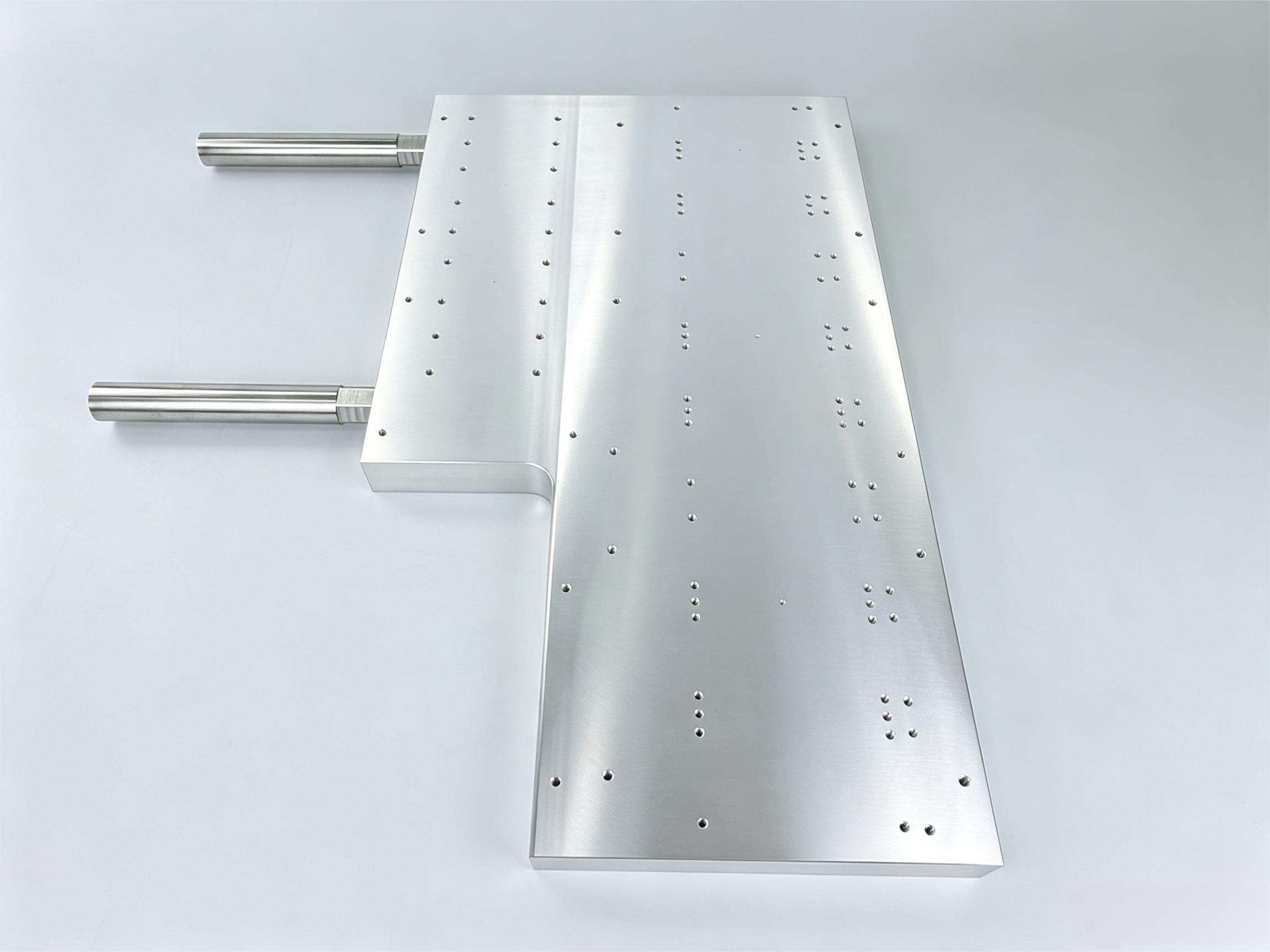
3. Friction Stir Welding (FSW)
Process Principle
Friction Stir Welding is a solid-state joining technique. A high-speed rotating tool pin is inserted into the joint between the workpieces. Friction generates localized heat to plasticize the material, which is then mechanically forged together under pressure without melting the base metal.
Key Advantages
-
Exceptional Structural Integrity: The resulting weld joint retains more than 90% of the parent material’s strength, offering superior fatigue resistance and structural robustness under dynamic stress.
-
Eco-Friendly: Requires no filler wire, shielding gas, or fluxes, significantly reducing carbon emissions and environmental impact during manufacturing.
Process Limitations
-
Equipment & Cycle Costs: Custom tooling and specialized multi-axis CNC FSW equipment add setup cost, and welding speeds are moderately paced (typically 0.5–1.5 m/min).
-
Geometrical Limits: Best suited for planar joints; less adaptable to complex 3D curved surfaces or thin-wall structures.
Typical Applications
-
Cell-to-Pack (CTP) and Cell-to-Chassis (CTC) EV battery liquid cooling plates
-
Aerospace electronic cooling plates
-
Heavy-duty industrial equipment subject to high vibration
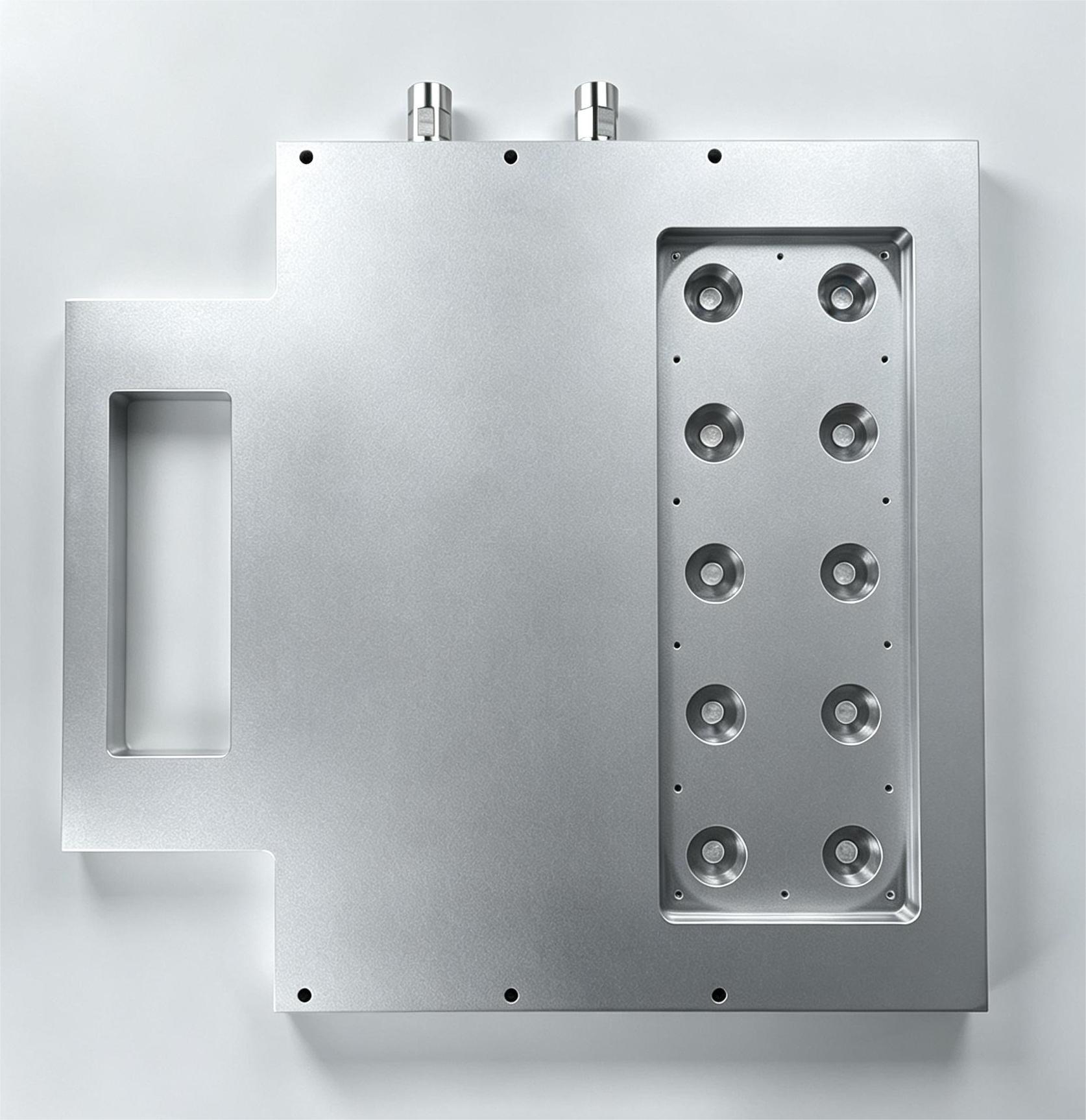
4. Deep Drilling
Process Principle
Using precision deep hole drilling machines (gun drilling), micro-coolant channels with depth-to-diameter ratios exceeding 10:1 are machined directly into a solid metal block (copper or aluminum). The channels are then connected via external manifolds or plugged cross-drills to complete the cooling circuit.
Key Advantages
-
Extreme Thermal Performance: The internal drilled channel walls are extremely smooth, minimizing fluid flow resistance and maximizing thermal transfer efficiency.
-
Solid Material Integrity: Eliminates multi-layer stacking or brazed joints, making it ideal for pure copper substrates handling intense thermal loads.
Key Difficulties
-
Machining Precision: Deep hole drilling is prone to tool drift or deflection, requiring high-precision CNC equipment and specialized gun drills.
-
Design Limitations: Channels must follow straight lines, resulting in lower design flexibility compared to vacuum-brazed plates.
Typical Applications
-
Copper cold plates for high-power IGBT modules
-
High-heat-flux industrial lasers and optical equipment
-
High-power RF amplifiers
5. Stamping + Brazing Composite Process
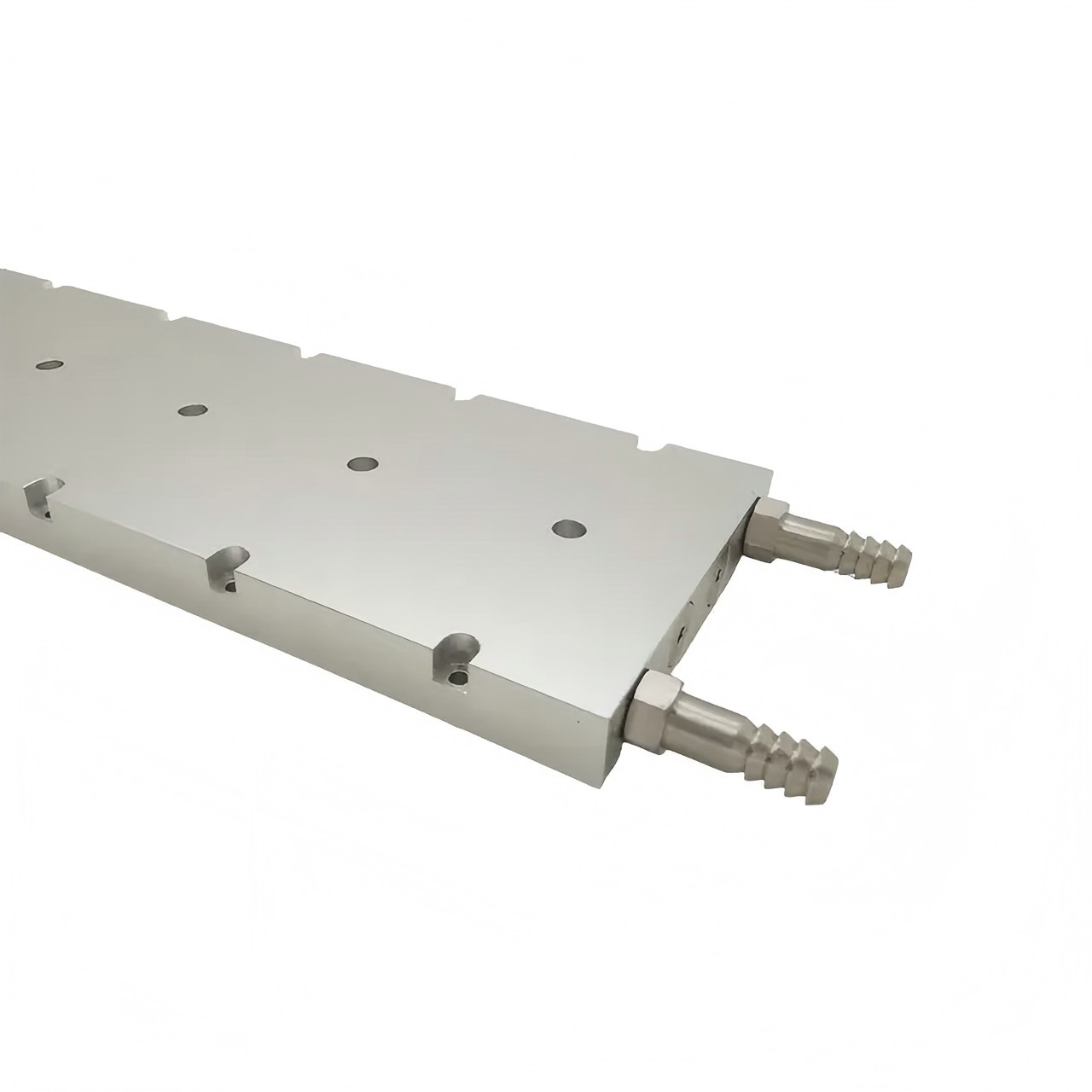
Process Principle
The fluid flow channel profiles are first stamped into thin sheet metal at high speed. The stamped channels are then sealed and bonded to a top plate using furnace brazing, combining processing speed with strong sealing.
Key Advantages
-
Optimal Cost-Efficiency: High-speed stamping significantly lowers cycle times. The unit cost can be up to 40% lower than FSW methods for high-volume orders.
-
Design Adaptability: Easily handles medium-complexity patterns like corrugated, wave-shaped, or branched fluid channels.
Typical Applications
-
Energy Storage System (ESS) container liquid cooling plates
-
Home appliance variable-frequency cooling modules
-
Commercial EV auxiliary power modules
Process Selection Guide: 4 Critical Decision Factors
Selecting the right liquid cooling plate manufacturing process requires balancing thermal performance, mechanical requirements, production volume, and cost.
1. Thermal Power Density
-
Above 500 W/cm²: Opt for Deep Hole Drilled copper cold plates or Vacuum Brazed micro-channel plates to handle high localized thermal flux.
-
Below 200 W/cm²: Embedded tube or stamping + brazing processes provide adequate cooling at a significantly lower unit cost.
2. Batch Size & Budget
-
Low-Volume / Prototype / Custom: Friction Stir Welding and Deep Hole Drilling offer lower initial NRE/tooling costs for small batches.
-
High-Volume Mass Production: Vacuum Brazing and Embedded Tube methods lower the per-unit cost at scale.
3. Operating Environment
-
High Vibration & Dynamic Loads (e.g., Automotive/EVs): Choose FSW (for weld joint strength) or Embedded Tube designs (which eliminate joints along the fluid path).
-
Corrosive Environments: Vacuum Brazed all-aluminum alloy structures avoid galvanic corrosion associated with mixed metals.
4. Flow Path Complexity
-
3D Intricate / Fine Micro-Channels: Vacuum Brazing provides the highest design freedom.
-
Simple 2D Linear or Serpentine Paths: Embedded Tube or Stamped processes are the most economical choices.
Partner with Xuyuan Precision for Custom Thermal Solutions
From the cost-effective reliability of embedded tube cold plates to the high heat-flux capability of deep hole drilled copper blocks, choosing the right manufacturing method is key to optimizing thermal performance and unit economics.
As power densities rise with 800V high-voltage EV platforms, AI data infrastructure, and large-scale energy storage deployments, Xuyuan Precision continues to advance precision thermal management technologies. Contact us today to review your thermal designs, select the optimal process, and request a customized quote for your liquid cooling requirements.
Post time: Sep-16-2026


